Search
Refine search
- Keyword
- Sustainability (37)
- Business (27)
- sustainability (23)
- ESG (20)
- Italy (20)
- innovation (19)
- tipocontenuto_006 (17)
- China (16)
- Subject
- Accounting & control (267)
- Economics (181)
- Financial system (51)
- Management (49)
- ICT (34)
- Law (24)
- Society & Culture (24)
- Environment & Energy (22)
- Sector
- Services industry (10)
- Media & communications (3)
- Heritage (2)
- Manufacturing (2)
- Non-profit sector (1)
- Primary industry (1)
- Education, training and research (1)
- Transport (1)
- Content type
- Journal article (426)
- Editorial & column (40)
- Infographic (12)
- Case history (4)
- Book (4)
- News & intervention (4)
- Dossier and report (3)
- Interview (2)
- Language
- English (267)
- Continent
- Europe (23)
- Asia (3)
- Africa (1)

University and Industry: Good Research Is a Question of Governance
R&D: Interaction between the academic world and businesses. Why? The acquisition of external knowledge is necessary for R&D activities and innovation of businesses, as they cannot rely only on their internal resources to produce innovation effectively, and need access to knowledge outside their boundaries. This is particularly evident in the current context of market globalization and rapid ...
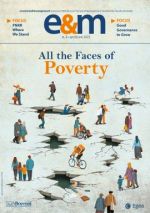
A New Space for Corporate Social Responsibility
Sustainability has certainly been a challenge and a subject of debate for a number of years now; a challenge for businesses that have discovered the high financial investments required in this regard, and a subject of debate because in its three dimensions of "environmental, economic, and social sustainability," it has become an expression that encompasses many areas of intervention and presents many ...
The Sentimental Re-education of Businesses
On April 20th, the experimental launch of Starship, the most powerful rocket ever built, took place. This rocket is intended to return humans to the moon and possibly to Mars. The launch was followed live by millions of people and received extensive media coverage. Just minutes after liftoff, the rocket lost control and was made to explode. In the now long history of space flights, this was not the ...
The Growth of Fine Dining: the Case of Langosteria
Fine dining grew by 12 percent in 2022 (a higher increase than luxury cars, for example), reaching a global market value of 57 billion, representing 4 percent of the overall luxury market.[1] The brilliant post-pandemic recovery can be attributed to both the desire to spend quality time outside the home and the experience of food as an important moment for socialization. Especially in sophisticated ...

The Keyword is Transformation
We are living in a moment where the challenges are immense for all sectors, and perhaps more than ever before, these challenges are cutting across various industries. If we look at the automotive industry today, we see a transformation of unprecedented magnitude, never before seen in the 150 years of our industry's existence, nor in most other sectors even today. This transformation is a direct result ...
The Nature of Change
Facing change is a constant condition for businesses. Not only because the world around us is constantly changing, and businesses must decide how to respond to new external conditions. But also because we ourselves change, and the inevitable life cycle of individuals modifies businesses internally. New people join the company, others leave, and the people who remain, even simply due to aging, change ...
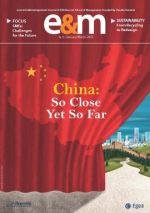
The China That Is Also a Part of Us
An argument exists that we should never write about China, because historically it is a country where the system always exists with what can change it, and by the time we describe it, it has already changed. Yet much has been written about China, and the numerous descriptions oscillate between two extremes: that based on the misunderstanding of China being far away, “mysterious,” incomprehensible, ...

The Contagious Power of Inclusive Brands
A key element of the Diversity Brand Index 2024 is the web survey, conducted during 2023 on a sample of 1,070 respondents, which confirmed and reinforced insights from previous editions. Indeed, an even stronger link emerges between brands’ commitment to DEI, NPS, and revenue growth. NPS or Net Promoter Score is a word-of-mouth indicator measuring the percentage difference between Promoters and ...

Toward Ethical and Sustainable Business Models: Judicial Administration and Corporate Revitalization
Judicial administration has become a tool for economic crime prevention and corporate recovery, capable of advancing organizational change toward a more ethical and sustainable business. By examining court cases in the logistics, fashion, and food delivery sectors, the study shows how this judicial measure can prompt companies to review their organizational structures, implement 231 Compliance Models, ...
Insights from Women Independent Distributors: Workforce Social Sustainability in Network Marketing
Building on the existing literature on network marketing, this exploratory study represents an initial attempt to assess the social sustainability of the workforce (WSS) in network marketing direct selling organizations (NMDSOs). A questionnaire was developed based on a conceptual framework that examines the influence of business models and practices, interpersonal work environments typical of personal ...