From research to practice: game-based learning for knowledge transfer
Introduction
In recent years, the impact – and thus the vital nature – of effective knowledge transfer between academia and the real world has been the focus of increasing attention from scholars (e.g., Wickert et al., 2021). While management research aims to generate valuable insights, a persistent challenge lies in embedding this knowledge into organizations in ways that foster change in managerial and organizational practices (MacIntosh et al., 2021). This difficulty contributes to the well-documented “research-practice gap,” where findings from management studies often fail to translate into actionable improvements in organizations (Bartunek and McKenzie, 2017; Bartunek et al., 2014; Rynes et al., 2001).
To close this gap, scholars have been advocating for co-creating knowledge with practitioners. This approach ensures that research outputs align with real-world contingencies and can be more easily assimilated by organizations (Bansal et al., 2012). However, achieving impact means going one step further: knowledge must also be actively incorporated into organizational processes to drive meaningful change (MacIntosh et al., 2021).
A critical link between knowledge transfer and its practical application is organizational learning, the process through which organizations acquire, interpret, and apply knowledge to improve, modify and rework practices (Easterby-Smith and Lyles, 2011). A key obstacle to this type of learning has to do with how individuals in organizations engage with new knowledge and assimilate it when they understand its practical applications. Effective learning in organizations is not a passive process; instead people must interact with and adapt knowledge in order to embed it meaningfully within organizational processes (Kolb, 1984). In this view, effective knowledge transfer calls for more than the passive dissemination of findings; it necessitates mechanisms that integrate thinking with doing (Sharma et al., 2022).
To bridge knowledge transfer and learning, scholars have advocated for grounding new knowledge in tools designed to translate it into practice by fostering an experiential understanding of knowledge (Sharma et al., 2022), i.e., dynamic comprehension gained by directly practicing knowledge in situated contexts (Cook and Brown, 1999). Despite growing recognition of these dynamics, the role of structured learning tools in facilitating knowledge transfer remains underexplored.
Addressing this gap, our study examines the co-development of a game-based experiential learning mechanism in the context of a long-standing academic-practitioner partnership in the field of health, safety, and environmental (HSE) management in Italy. Drawing on experiential learning theories (Kolb and Kolb, 2009), we explore how knowledge can be baked into a role-play gaming mechanism to enhance organizational learning through interactive, experience-based engagement. In designing this learning tool, we apply principles from game development, structuring the learning experience around a dynamic, hands-on framework.
Although the game is only in the design phase, and we have not yet developed or tested it, our preliminary findings offer three main contributions. First, we bridge literature on knowledge transfer and learning by illustrating how collaborative tool development serves to connect academic research and learning in organizations. Second, we integrate perspectives on co-creation and experiential learning to highlight mechanisms that enhance the absorption and application of new knowledge in organizations. Third, we propose a replicable game-based experiential learning framework—structured around an “event X intervention” framework—as a promising approach for fostering deeper involvement with co-created knowledge, ultimately strengthening organizational learning processes.
The rest of the article proceeds as follows: First, we outline the theoretical background of the study, focusing on the role of game-based experiential learning in bridging knowledge transfer and organizational learning. This is followed by a description of the methodological approach and the context of the co-creation process. We then describe how the game-based experiential learning mechanism was collaboratively designed, tracing the process from early ideation to the formulation of the final game mechanism. Next, we discuss its core impact and implications. The article concludes with reflections on the study’s contributions, managerial implications, and directions for future research.
Advancing knowledge transfer through game-based experiential learning
Serious games, which are designed for purposes beyond mere entertainment (Riedel and Hauge, 2011), can be employed to promote learning and circulate knowledge in organizations.
According to Kolb’s (1984) Experiential Learning Theory, knowledge is created through the combination of grasping and transforming experience (Kolb, 1984; Kolb and Kolb, 2009). Grasping, in this context, involves concrete experience and abstract conceptualization; transforming entails reflective observation and active experimentation (Kolb, 1984; Kolb and Kolb, 2009). Learning occurs in a cyclical manner: concrete experiences lead to reflections, which are transformed into abstract concepts; these concepts inform implications, which are then tested and applied when facing new experiences (Kolb and Kolb, 2009). Serious games can play a pivotal role in this process. They provide realistic experiences that mimic real-world scenarios (concrete experience), encourage reflection on actions (reflective observation), facilitate the development of theories and strategies (abstract conceptualization) which are tested during the game experience (active experimentation) (e.g., Aldea et al., 2014; Klabbers, 2018).
When applied during organizational change and development, or the introduction of workplace innovations, or the dissemination of best practices, serious games offer five main advantages (e.g., Aldea et al., 2014; Carella et al., 2024; Ruohomäki, 2001). First, they allow participants to experience situations that would be impractical or impossible in real life (Aldea et al., 2014; Susi et al., 2007). Second, they enhance cognitive skills that are essential to promote reflection, understand the problem, identify current needs, generate useful ideas and insights for organizational restructuring, and guide the actions to be taken (e.g., Aldea et al., 2014; Carella et al., 2024; Ruohomäki, 2001; van Kasteren and Peters, 1998). Invaluable skills such as problem solving, critical thinking, decision making, communication, and cooperation are honed during gameplay (Riedel and Hauge, 2011; Susi et al., 2007). Third, serious games improve knowledge management by enabling employees to connect prior knowledge with new and unfamiliar events in an interactive and absorbing manner (Allal-Chérif et al., 2016). In this way, these initiatives help companies capture, formalize, and disseminate valuable knowledge and competences, ensuring that they are effectively transferred to new employees (Allal-Chérif et al., 2016). Fourth, serious games foster acceptance, motivation, commitment, and engagement during organizational change (e.g., Aldea et al., 2014; Carella et al., 2024; Riedel and Hauge, 2011) and promote interaction across organizational units and hierarchical levels (Ruohomäki, 2001; van Kasteren and Peters, 1998). Finally, organizations can personalize serious games and customize the experience¸ which further amplifies the positive effects (Streicher and Smeddinck, 2016).
Considering these effects, the integration of game-based experiential learning into research-practice knowledge transfer can generate impact. In fact, serious games offer a practical means of translating knowledge into action as they facilitate the experiential understanding of co-created knowledge (Sharma et al., 2022). Drawing on this intuition, the study describes the co-creation process, examining how the distinct sets of knowledge of researchers and practitioners become imbricated in the game-based experiential learning mechanism; this occurs thanks to an evolving process of in which participants pragmatically select and combine their insights.
Methodology
The Health, Safety and Environment (HSE) Laboratory
The co-creation process outlined in this study occurred in the context of the Health, Safety and Environment Laboratory (known as the HSE Lab), established in October 2017. The HSE Lab is a collaborative initiative between companies and academia, aimed at co-designing, co-developing, and testing innovative approaches and tools to strengthen companies’ managerial and organizational capabilities in tackling HSE challenges. Underpinning the HSE Lab are two considerations. First, formal systems alone are insufficient to sustain focus on HSE issues as safety concerns persist and the environmental crisis intensifies. Second, knowledge co-creation, merging practice and research, is critical for addressing the difficulties in translating academic knowledge into managerial practices and for developing practical solutions to real-world business scenarios that can generate tangible impact.
During the fourth edition of the HSE Lab in 2024, the research team proposed the co-development of a game-based experiential learning mechanism, one that would evolve into a serious game, to nurture essential soft skills, strengthen HSE leadership, and enrich the organizational culture. Serious games can effectively complement existing HSE training games (which typically focus on technical aspects), by honing leadership skills and raising awareness of decision-making processes in HSE management while taking an engaging and interactive approach.
The structure and characteristics of the HSE Lab made it particularly well-suited to facilitate the co-development of a game-based experiential learning mechanism. The co-creation process involved HSE Lab members, specifically 37 HSE practitioners, primarily middle- or senior-level managers, from 16 large Italian companies spanning various economic sectors. Their participation was staggered across multiple editions of the HSE Lab; some organizations have been onboard since its inception in October 2017, while others joined more recently in March 2024.
This diversity in sectors and the long-term membership of many companies provided a rich foundation for co-creating the game-based experiential learning mechanism, as practitioners brought specialized expertise from industries where HSE issues are particularly complex. This expertise allowed them to provide valuable insights and critical feedback throughout the co-creation process.
Participants in the HSE Lab engaged in close, frequent, and sustained interactions over time. These interactions, which occurred nearly every week, were a mix of formal and informal exchanges and fostered knowledge co-creation and sharing. Moreover, many organizations took part in multiple editions of the HSE Lab. Throughout the co-creation process, decision-making was a collaborative effort: researchers and practitioners worked together to define the objectives, as well as the methods and activities they needed to undertake to achieve these aims.
Data collection
The co-creation process of the game-based experiential learning mechanism took place over 15 online and in-person encounters held between March and October 2024. These included: (i) two ideation meetings focused on discussing and defining the game mechanism; (ii) nine co-creation meetings to gather the necessary information for the design phase; and (iii) four ideation and co-creation meetings that addressed both objectives simultaneously.
During the co-creation process, several types of materials were generated. Observational data was gathered by the research team throughout the project. Researchers closely monitored all interactions related to ideation and co-creation and took detailed notes, focusing on participants’ opinions and reactions, the issues they raised, the solutions they proposed, and the methods they employed. These notes were reviewed and compared among the researchers before being shared with the HSE managers; subsequently this input determined the next steps in the co-creation process.
Three PowerPoint presentations supported the ideation and co-creation meetings and were used to: (i) introduce the concept of gaming and game-based experiential learning, (ii) facilitate brainstorming sessions on the role of gaming in training, the potential audience, and gameplay modes, and (iii) encourage discussions about the outcomes of group work, refining ideas related to the game mechanism. These meetings were followed by a comprehensive report, which served to: (i) enhance communication about the technical aspects of the game mechanism, including its characteristics and content, (ii) document the insights generated throughout the co-creation process, and (iii) identify issues that demanded further attention.
Key information for designing the game mechanism was generated during the co-creation meetings. This included a list of HSE-related events and interventions, how they were related, and their effects on various dimensions (e.g., budget, compliance, participation, employee satisfaction, productivity, and corporate reputation). The information also covered the optimal timing for implementing interventions and the structure of game levels and scenarios. The generation and subsequent validation of this information took place during collaborative group work sessions and follow-up meetings. Participants, organized into groups of three or four, were guided step-by-step with a series of documents that facilitated task completion and guaranteed that results would be organized in a systematic fashion.
Emails, video calls, and phone calls were also used to facilitate communication between participants and researchers. These channels served to provide updates on the co-creation process, to clarify emerging questions, and to gather additional insights.
Data analysis
The data analysis followed three distinct steps. In the first step, researchers focused on surfacing and bracketing different phases in the process of co-developing the game-based mechanism, drawing on both observational data and materials collected during the events (Jarzabkowski et al., 2019). In doing so, researchers reviewed and examined fieldnotes, power point presentations and project reports to categorize the principal activities, the main outputs, and the content of the discussions among participants at the events, both during the plenary meetings and in the work groups. This analysis revealed two processual brackets: ideation and co-creation. Ideation encompassed activities intended to align participants’ needs and expectations for the serious game; co-creation instead comprised a diverse set of activities that served to articulate the game’s core components to iteratively shape its architecture and functionality.
In the second analytical step, researchers delved into the observational data to delineate the dynamics that characterized and shaped the development of the game mechanism in the two separate phases. For instance, in examining the ideation process, particular attention homed in on understanding how participants’ needs shaped their expectations regarding the game’s objectives (i.e., learning outcomes), how ideas were generated and iteratively refined, which doubts and conflicts emerged and how they were resolved, and which key issues stimulated the most debate. To capture this through the fieldnotes, the researchers traced discussions about needs, expectations, doubts, and ideas across events to track the iterative convergence around certain design directions. The analysis of the co-creation process centered on understanding how the game’s core components were conceptualized step by step, how these components were interlinked, and how the tool’s functionality was enhanced throughout the process. Accordingly, thanks to reports compiled after each event, researchers charted decisions taken throughout the process regarding core elements of the game mechanism, reconstructing how they were revised and adjusted over time until reaching the final configuration.
Lastly, the third analytical step involved linking co-creation design decisions back to issues that emerged during ideation. The aim here was to reconstruct cross-phase dynamics and determine whether co-creation addressed, reframed, or left unresolved those concerns, thereby yielding an integrated account of the game mechanism’s development.
All analytical steps were conducted in parallel by two researchers (participant-observers), supported by NVivo 15 software for qualitative data analysis. At the end of each step, the two researchers compared and discussed preliminary results with a third researcher, who was only partially involved in game development. The point of this evaluation stage was to surface convergent and divergent interpretations, which were then critically examined to reach a shared analytic understanding.
Throughout the analytical steps, the researcher team conducted data analysis following the principles of proximity and objectivity, striving to mitigate the risk of unintentionally mirroring and validating the viewpoints of group members without thoroughly investigating the fundamental factors influencing their behavior (Dumont, 2023). Researchers balanced field experience with theoretically grounded analysis, merging an insider’s deep familiarity with the context with an external, independent perspective. This made it possible to maintain a critical approach and analyze the empirical material iteratively. Additionally, researchers prioritized neutrality, refraining from framing moral and ethical behaviors and events (Maier and Monahan, 2010). Finally, they merged their perspectives based on their individual participation, specifically those colleagues who attended all the meetings as opposed to only selected encounters during the HSE Lab. The diversity of viewpoints ensured an impartial reconstruction, analysis, and interpretation of the collected materials and enabled a form of internal triangulation: continuous observers contributed contextual depth and narrative continuity, while the outlooks of partial observers were less entrenched in the group dynamics. These divergent perspectives were systematically compared and integrated to support a neutral, balanced, and analytically rigorous interpretation of the co-creation dynamics.
Researchers also aimed to ensure generalizability (i.e., the ability to transfer insights from this research to different contexts), essential albeit complicated in qualitative research like this; it depends in fact on sampling, credibility and validity, and detailed descriptions (Parker and Northcott, 2016). The characteristics of the HSE Lab and its participants were a guarantee of high-quality sampling. The integration of a range of experiences and analytical perspectives from both researchers and practitioners strengthened the credibility and validity of the results. Finally, careful direct observation and the creation of materials for different purposes produced detailed documentation of the co-creation process and its outcomes.
Designing the game-based experiential learning mechanism
The co-development of the game-based experiential learning mechanism unfolded through two distinct yet interrelated phases, as mentioned above: ideation and co-creation. The first focused on critically refining participants’ expectations and needs with regard to a serious game that was meant to integrate co-created knowledge. In contrast, the second phase involved conceptualizing the game’s core components and interweaving their relationships to progressively shape its structure and functionality.
The analysis of the ideation process reveals how diverse needs led to differing expectations regarding the serious game’s objectives and modalities. This phase was inherently iterative and reflexive, as researchers and managers continuously reassessed their expectations, addressed questions and uncertainties, and established a solid foundation for the co-creation process. Participant discussions centered on five central issues: learning outcomes, target users, the gameplay context, evaluation and feedback, and unintended consequences.
Alongside the ideation process, researchers and managers actively contributed to co-creating the game mechanism itself. Co-creation sessions focused on envisioning essential components and integrating their relationships to gradually forge the game’s structure and functionality. The process followed a step-by-step approach: each new component was first conceptualized and then its interactions with existing elements were collaboratively defined. At each stage, participants critically discussed the functionality of newly introduced components, assessing their alignment with learning outcomes and considering potential unintended consequences or biases.
The following sections of this article examine the key elements of the game-based experiential learning mechanism, tracing its development from ideation to co-creation. This analysis follows the progression from conceptualizing a basic game to designing a more complex, integrated system.
Ideation
Learning outcomes –The game-based experiential learning tool was designed with an eye to balancing hard and soft knowledge in HSE management. During the early ideation phase, together participants discussed the intended learning outcomes, focusing on the organizational impacts they hoped to achieve and the types of knowledge the serious game should convey. While there was agreement on the overarching goal of strengthening HSE culture, there was also debate around whether the serious game should primarily reinforce hard knowledge—such as legal requirements, compliance protocols, operational procedures, and the technical aspects of work operations—or whether it should foster an understanding of behavioral and socio-psychological factors (i.e., soft knowledge), such as open communication, leadership, managerial commitment, personal involvement and proactive engagement (Todaro et al., 2023). Co-creators drew on prior HSE Lab sessions and a conceptual framework (Christian et al., 2009) that distinguishes between compliance (adherence to rules) and participation (voluntary, proactive behaviors). The final consensus was that an exclusive focus on hard knowledge would not effectively reinforce HSE culture. Instead, a comprehensive approach integrating both dimensions was deemed essential for fostering a systemic understanding of HSE performance at strategic, organizational, and individual levels.
Managers noted that existing HSE training programs predominantly emphasize hard knowledge, often neglecting behavioral and organizational aspects; this led to low engagement and the perception of training as an obligation rather than a meaningful learning opportunity. To address this, participants agreed that incorporating both knowledge types into the serious game would enhance its relevance and appeal, boosting motivation and engagement. This was clearly reflected in notes taken by the researchers during one of the ideation meetings:
“Participants have consistently emphasized the importance of combining technical content with behavioral components. Several managers have pointed out that a training experience focused solely on procedures would be perceived as repetitive and disconnected from everyday organizational dynamics.”
In light of these observations, the co-developed game-based experiential learning mechanism was designed to position HSE management as an integral part of organizational life, interwoven with broader business and management processes.
Target users – Discussions on the serious game’s learning outcomes were closely linked to its target audience, as participants debated whether to focus on a broad employee base or HSE management. Expanding the audience could enhance organizational awareness of HSE issues but risk diluting the depth and specificity of knowledge. Similarly, questions were raised as to whether the serious game could effectively speak to both white-collar and blue-collar employees, given their distinct HSE learning needs. While blue-collar employees need task-specific, operational knowledge, white-collar employees deal with managerial aspects such as budgeting, compliance, and risk management.
To enhance realism, participants initially considered designing the game-based experiential learning mechanism around role-specific responsibilities. However, as discussions evolved, they recognized the need to foster a systemic understanding of HSE interdependencies. This meant exposing players to scenarios outside of their immediate roles, such as prompting blue-collar employees to consider budgeting for HSE interventions. This change in perspective was documented in the researchers’ notes during an ideation meeting:
“Several participants have emphasized the importance of aligning game scenarios with real roles and tasks, suggesting that this would increase realism and user engagement. …Different voices have emerged emphasizing that keeping roles too fixed might limit learning. The idea of exposing players to situations outside their usual roles is seen as a way to get them thinking about how their actions might affect others across different areas or functions.”
Consequently, the conceptualization shifted from a strict simulation of HSE processes to a broader representation of the organizational landscape. This approach not only accommodated diverse learning needs but also supported the goal of disseminating HSE culture across all organizational levels.
Gameplay context – The co-development of the game-based experiential learning mechanism required a decision on the optimal “where” and “when” for its deployment. Managers needed to identify the appropriate circumstances in which employees could step away from their daily tasks to focus on the serious game. This meant considering the necessary physical and technological infrastructure, as well as ensuring sufficient guidance and support for users. HSE training sessions emerged as the most suitable context for the serious game. Given that all employees attend mandatory HSE training, integrating the serious game into these sessions would minimize disruptions to work schedules. This approach also allowed for effective supervision by instructors, who could provide guidance and facilitate discussions, enhancing the learning process.
However, the tight time constraints of HSE training sessions, which typically followed a fixed schedule, posed a critical limitation. The serious game needed to fit in a 30-minute break during these sessions, which limited the possibility for in-depth exploration of complex organizational dynamics. Participants recognized this time constraint as a major hurdle, necessitating game design capable of conveying key insights during a brief yet impactful learning experience.
Evaluation and feedback – To integrate the serious game into HSE training programs, experiential learning mechanism would need to be constructed to effectively measure users’ learning outcomes. This brought up a critical challenge: quantifying learning related to soft knowledge and complex organizational dynamics. While hard knowledge, such as compliance with rules and procedures, could be easily measured through standardized tests, appraising skills like decision-making in complex contexts requires more sophisticated evaluation methods. Therefore, a nuanced approach to learning assessment would be necessary, moving beyond the traditional score-based performance evaluation typically used in serious games.
Some participants suggested incorporating both quantitative indicators (e.g., performance scores) and qualitative feedback to enhance learning outcomes. This could include images, short texts, or video clips to help the player reflect on their gameplay, highlighting how their hard and soft skills and knowledge were (or were not) demonstrated by their choices. However, concerns were raised that overly detailed feedback could detract from engagement and enjoyment of the serious game, potentially diminishing its effectiveness as a learning tool. These concerns are pointed out in the notes taken by the researchers:
“Some participants have explicitly recommended avoiding long or excessively detailed feedback elements, expressing concern that this might slow down the experience and risk making it tedious for players.”
Unintended consequences – Defining win/lose conditions in the serious game posed challenges due to the inherent complexities and uncertainties of organizational and behavioral dynamics. Some participants argued that establishing clear-cut conditions would require a deterministic approach to relationships between phenomena, which are often probabilistic and nuanced in real-world contexts. Strict win/lose conditions could also distort the intended learning outcomes, introducing potential biases or misleading information, thereby undermining the serious game’s scientific foundation. This raised concerns about unintended consequences in the design, particularly regarding the messaging around key decisions. For example, including budgetary constraints when evaluating safety interventions could imply that economic considerations override safety priorities. Similarly, framing financial limitations as a “lose” condition might undermine the importance of prioritizing health and safety in organizational decision-making. These observations underscored the need for careful, balanced game design to ensure that the educational objectives were accurately conveyed. Notes taken by the researchers during the meetings reflect this:
“Participants generally agree on the usefulness of defining win and lose conditions, even as a way to streamline the game mechanism. At the same time, however, they emphasize the importance of formulating these conditions with caution, to avoid conveying misleading messages or overly simplified interpretations that may not reflect real organizational contexts and dynamics.”
Co-creation
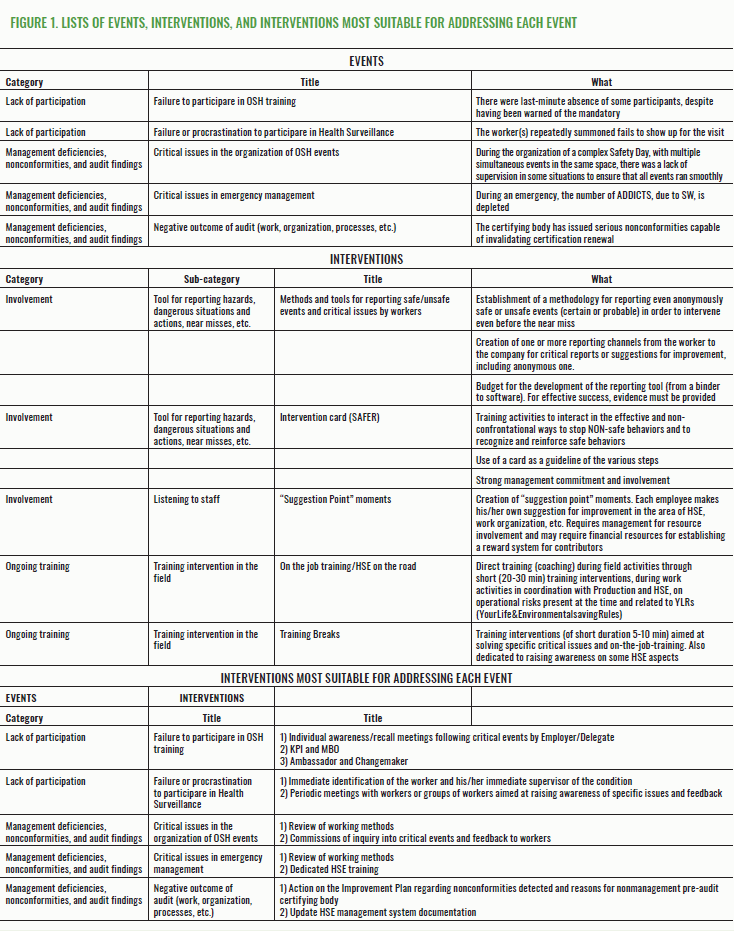
Events and interventions – The game-based experiential learning mechanism was built around two core components: events and interventions. Events represented a wide range of adverse HSE-related situations in the workplace, such as accidents, near misses, non-compliance, unsafe behaviors, or general signs of a weak HSE culture. Interventions, on the other hand, were actions or initiatives designed to address these events and improve HSE culture and performance, such as training or changes in work processes and procedures, management systems and control mechanisms.
To simulate decision-making in resolving HSE issues in a hypothetical organizational context, players would be presented with one event at a time and tasked with choosing the most appropriate intervention from a range of options. To populate the event and intervention components, participants in the co-creation process were divided into groups focused on one or the other. Drawing on their hands-on experience, they came up with common HSE events and interventions, providing specific details for each to validate plausibility. Both events and interventions were coded in order to group them into consistent conceptual categories. This coding process allowed the researchers to structure events and interventions in a more systematic way, facilitating comparability and interpretability and, ultimately, making it easier to examine the relationships between types of events and corresponding interventions. For example, coding some events under the category “lack of participation” and others under “awareness-raising” provided a clearer basis for reflecting on the possible relationships between them, as awareness-raising directly targets motivation and engagement.
In the next stage, participants conceptually linked interventions to events to identify which of the former would be most suitable for addressing each of the latter. This process led to the creation of an “event X intervention” matrix, where each event was correlated to at least one intervention. This matrix formed the foundation for the game’s decision-making framework. Figure 1 provides an illustrative overview of the events, interventions, and the matrix mapping the most suitable interventions for each event, according to the participants. The figure, which presents only excerpts from the complete lists, is intended as merely exemplificative rather than exhaustive.
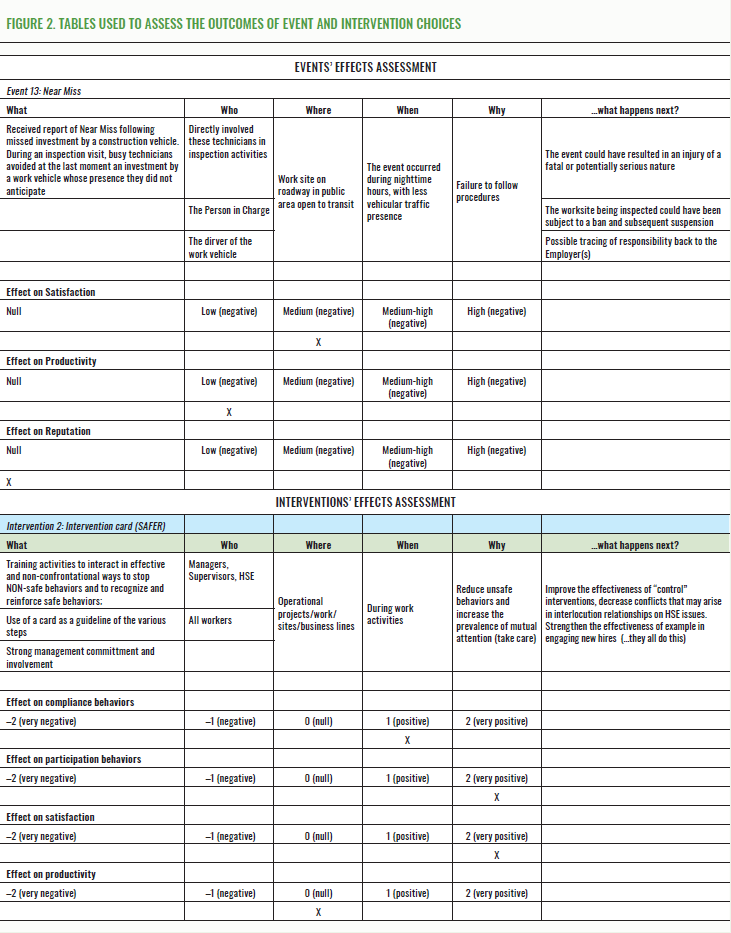
Performance metrics – The game-based experiential learning mechanism incorporates a set of performance metrics to assess the outcomes of event and intervention choices across multiple organizational dimensions:
Productivity captures both the disruptions caused by HSE-related issues (such as accidents or inefficiencies) and the positive effects of interventions (like improved processes or safer equipment). For instance, an accident might impede production, while a training intervention could hone workers’ skills and increase long-term productivity.
Satisfaction measures the effects of HSE-related events and interventions on workers’ morale, motivation, and commitment. For example, a safety incident could lessen satisfaction due to concerns about workplace safety, whereas a proactive training initiative on the topic could boost morale and engagement.
Reputation assesses the broader effects on stakeholder relationships and corporate image. This includes the trust and credibility of the organization in the eyes of labor unions, regulatory agencies, and external stakeholders (such as NGOs). A safety violation or regulatory non-compliance could negatively impact reputation, whereas effective interventions might enhance the organization’s image as a responsible entity.
Budget represents the financial constraints imposed on HSE management decisions. This metric accounts for the resource limitations participants face when selecting interventions, forcing them to make decisions based on available budgets.
Through this comprehensive assessment, the serious game will provide users with insights into the interconnectedness of HSE decisions and broader organizational performance, as the players can observe how their decisions affect not only workplace safety but also overall productivity, employee well-being, and the organization’s standing in the world. This approach highlights the complex nature of HSE management, illustrating its wider implications in the organizational context.
Figure 2 presents the conceptual assessment of the outcomes of event and intervention choices across multiple organizational dimensions.
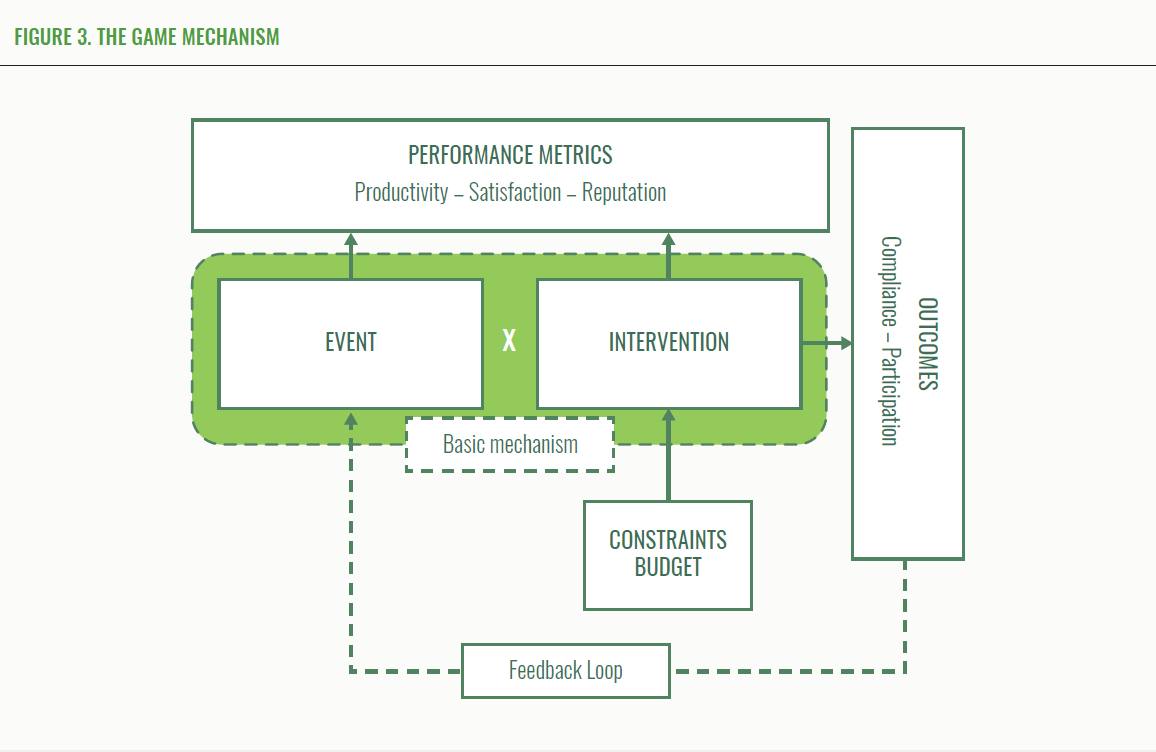
Feedback loop – Fostering an understanding of the interdependence between workers’ behaviors regarding compliance and participation and HSE performance required establishing a clear relationship, in the gameplay environment, between these behaviors and the events that could occur. To do so, participants recognized the need to create a feedback loop mechanism as part of the game design. In the resulting model, the user’s compliance and participation scores would not just passively influence the game’s outcomes, but actively shape the types of events the player would face during the session. The lower the scores in these two areas, the more likely the user would encounter events stemming from those deficiencies. For example, low compliance scores (i.e., when workers don’t follow safety protocols) would trigger events such as accidents, injuries, or safety violations, while low participation scores (i.e., when workers don’t take part in HSE improvement initiatives) would lead to events such as absenteeism in training sessions or lack of involvement in safety audits. This feedback loop ensures that events are not randomly generated but are directly tied to the players’ ongoing performance and decisions. This means that the outcomes of intervention choices—whether they improve compliance or participation—directly affect the types of events the player will face, which in turn influences their ability to successfully manage HSE risks.
This approach, where the design of events is tied to the specific deficiencies in compliance or participation, aligns with the educational goal of illustrating the complementary and synergistic nature of these two behaviors in promoting effective HSE management. By linking the outcomes of intervention choices directly to the occurrence of related events, the serious game will demonstrate the crucial role of both compliance and participation in maintaining a safe, productive work environment.
Figure 3 provides a stylized representation of the game-based experiential learning mechanism at this stage of the co-creation process, comprising the basic “event X intervention” mechanism, and components of performance metrics, outcomes, constraints (budget), and the feedback loop.
Levels and settings – Settings contextualize the events presented to the player. By simulating plausible organizational environments, the serious game will give users insight into the various contextual factors (such as specific work environment risks) that they should consider when searching for the root causes of incidents and determining the appropriate interventions. This contextualization will deepen players’ understanding of the complexities involved in HSE decision-making. Incorporating various settings allows for different levels of complexity throughout gameplay, effectively tailoring the difficulty of the scenario to the player’s progress. Low-complexity settings reflected environments with minimal risks—typical work activities under normal conditions, in an office during regular hours, for instance. High-complexity settings, on the other hand, presented circumstances with greater risks, including environments with hazardous materials or atypical conditions, such as overtime, emergency situations, or interaction external parties like contractors. During co-creation sessions, three distinct settings ranging in complexity were created for each level, guaranteeing a wide range of experiences for players and promoting sustained engagement through multiple gameplay sessions. An example of a high-complexity setting developed during a co-creation meeting is presented in Table 1.

Consequently, each event in the game-base experiential learning mechanism was paired with an appropriate setting to maintain plausibility, while also making the simulation more engrossing. As the serious game progresses, level by level, users will be exposed to increasingly complex settings. This progression in complexity forms the basis for structuring the game across multiple levels of difficulty. This approach ensures that players will be continuously engaged, adapting their strategies to the evolving challenges in each setting.
Win/lose conditions and feedback sessions – The final design of the game-based experiential learning mechanism linked HSE performance to organizational outcomes, defining win/lose conditions through performance metrics related to productivity, satisfaction, and reputation. Failure to maintain positive values across these parameters results in a game over scenario, emphasizing the interdependence between HSE management and broader organizational success. In this case, the player has to start all over from the beginning, going back to the simplest level. Conversely, when players have successfully dealt with HSE factors on one level, they progress to the next one. The game-based experiential learning also integrates time for feedback after each level, framed as a management review meeting, reinforcing key HSE concepts and providing players with insights into effective decision-making. In this way, the serious game will not only assess performance but also facilitate learning, enhancing the understanding of HSE culture and leadership.
Figure 4 depicts the game-based experiential learning mechanism at the final stage of the co-creation process, showcasing the progression of gameplay through multiple levels (from introduction to three feedback sessions) guided by performance metrics and outcomes, and governed by win/lose conditions. Specifically, each level introduces a set of events and corresponding interventions whose outcomes point to the path forward. Feedback sessions give players the opportunity to reflect on their choices and support experiential learning through iteration and increasing complexity.
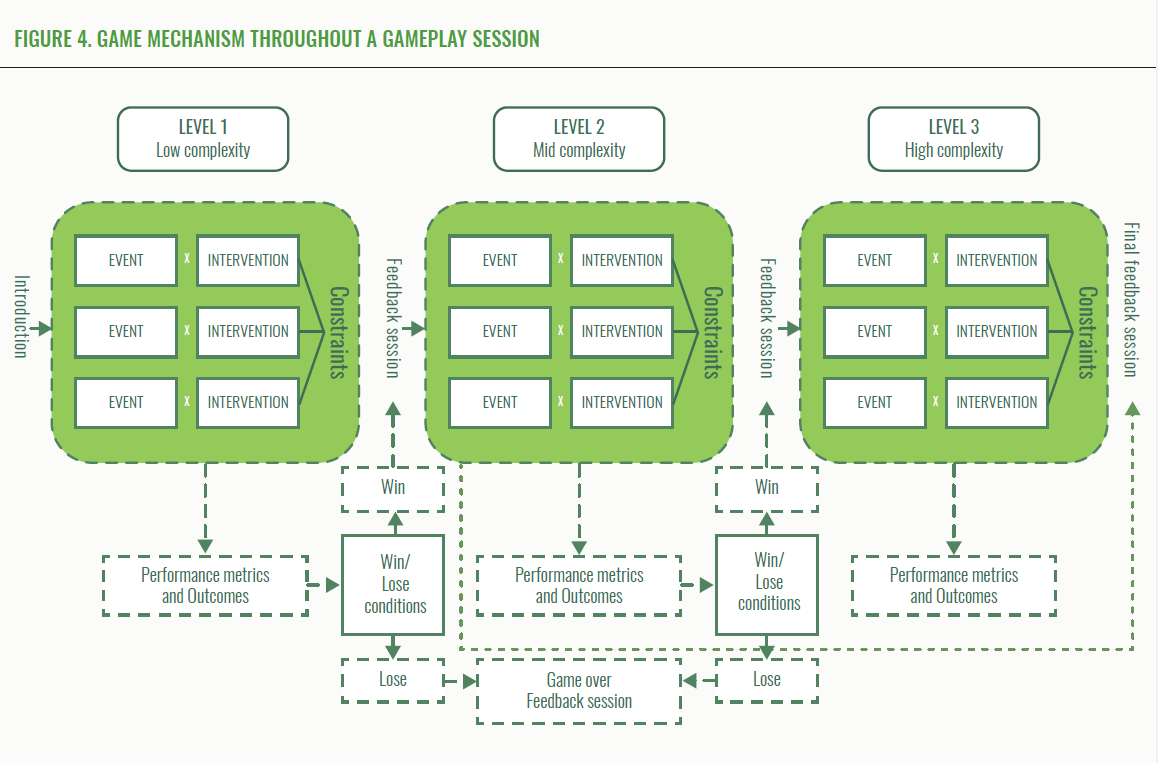
The applied game mechanism evolves into a methodology for mapping relationships between events and interventions. This approach makes it possible to structure the experience and integrate a clear framework to develop HSE actions and policies.
Discussion
The core mechanism described in Figure 4 addresses specific learning outcomes by providing an innovative framework for HSE training. It allows learners (the users) to visualize a range of plausible HSE-related events in a safe, controlled environment. This means they can interact with potential scenarios without the risk of real-world consequences. When design is based on an event-intervention representation, the simulation of artificial contexts contributes significantly to improving learning processes by promoting active engagement and experiential learning.
The possibility of customizing the game-based experiential learning mechanism represents an essential advantage that warrants special attention. Once the context and game mechanism are defined, the focus shifts to the users, specifically their preferences, expectations, and prior experiences. Based on these characteristics, the learning experience can be personalized; this serves not only to escalate motivation and individual engagement but also to give players the opportunity to experiment with a variety of starting roles. In fact, they can explore different roles and responsibilities individually or in groups, fostering a deeper understanding of diverse perspectives and interdependencies (Van Opheusden et al., 2023). The system’s configurability also allows for customization based on the specific needs of users and the knowledge and skills to be acquired. This flexibility extends to procedural adaptations (e.g., sequences and processes) and the complexity of assigned tasks (Long et al., 2023). The latter is calibrated based on the variety of tasks, the diversity of orientations and decisions, and the interdependencies between choices and game phases (Xu et al., 2021). Such adaptability enables both predefined role assignments and dynamic adjustments during the learning process, optimizing the educational impact.
The research introduces the concept of a development shell for learning experiences, shaped by interaction and guided by a codified co-design and co-creation logic. This framework integrates gamification principles to address limitations commonly encountered in the construction of serious games. The platform in question makes more effective solutions possible; its potential is evident as applied to HSE training. Specifically, the development shell integrates co-design and co-creation principles, structures knowledge and skills using an event-intervention representation, applying game design logic to create a robust and adaptive learning environment.
Lastly, we want to emphasize the aim of our work: to provide a replicable analytical co-design methodology that can be applied to other organizational contexts and domains that require different knowledge and competencies. This approach not only underscores the versatility of our framework but also draws attention to its potential as a model for scalable and transferable educational interventions across diverse disciplines. Indeed, our research contributes to the field of educational innovation by merging simulation, personalization, adaptability, and co-design into a cohesive framework. We not only advance the design of serious games but also establish a robust, scalable, and transferable model for enhancing learning outcomes in HSE and beyond. Future research could explore the longitudinal impact of such frameworks on knowledge retention and behavioral change, as well as their capacity to foster cross-disciplinary collaboration and innovation.
Concluding remarks and limitations
This study seeks to address the growing need to bridge knowledge transfer and organizational learning to influence and transform managerial practices in organizations (Sharma and Bansal, 2020). To tackle this challenge, we adopted a co-creation approach (Sharma and Bansal, 2020; Sharma et al., 2022), leveraging the experience of the HSE Lab, which is a collaborative partnership between researchers and practitioners aimed at designing, developing, and testing innovative approaches and tools to enhance the capacity of companies to address HSE issues. As part of this effort, we singled out game-based experiential learning as the most effective approach for generating and transferring knowledge in an experiential, interactive, and prescriptive manner. However, at the time of writing, the serious game is still in the design stage and has yet to be developed. While this presents a limitation, we believe it does not detract from the potential to derive meaningful insights from our work.
The co-creation process we implemented in this study is transferable to other contexts. To maximize its effectiveness, we recommend building on research-practice partnerships characterized by close, frequent, and sustained interactions over time. Such continuous collaboration facilitates the effective exchange and integration of both explicit and tacit knowledge, appreciably enhancing the co-creation process. In addition, we suggest enlisting participants with a high level of expertise. In doing so, their invaluable insights and critical observations will drive the co-creation process forward, particularly when they are also the intended end users of the co-created tool. Finally, the entire process should remain highly flexible and interactive, allowing players to collaboratively set objectives, refine methods, and adjust activities as needed throughout the process.
Since the serious game has not yet been developed, the next steps will focus on implementing the game software, testing its usability and suitability, and preliminarily assessing its impact on organizational learning. Since we followed common game design principles throughout the co-creation process, we can consider various user-friendly software tools and open-source platforms commonly used in serious game design for the implementation phase. For instance, Unity and Unreal Engine offer robust frameworks for building interactive, simulation-based experiences and support a wide range of features such as adaptive feedback, role-based scenarios, and performance analytics. As for open-source alternatives, platforms such as Twine or Godot may be suitable for developing lighter, narrative-driven prototypes. Selecting the appropriate development tool will depend on the desired set of features, graphical fidelity, and interactivity.
Following the development phase, we will test the serious game with a sample of employees from the organizations involved in the co-creation process, to ascertain the alignment between the tool’s design and the expectations and needs of its intended users. This pilot phase will gauge the serious game’s suitability in real-life HSE training contexts, along with its applicability and engagement potential among targeted players. We will also measure its preliminary impact on learning outcomes related to HSE culture and decision-making. The feedback we collect during this phase will guide our iterative fine-tuning of the serious game and inform our evaluation of its effectiveness in fostering organizational learning. This will also offer an opportunity to analyze the factors that contribute to the success of the serious game. Specifically, we aim to verify how participant characteristics—such as their expertise and their role as future users—influence the game’s effectiveness. We will also consider the design features of the serious game in our evaluation.
While the tool’s effectiveness remains to be corroborated, we are confident that the underlying game-based experiential learning mechanism can be constructively applied to other domains and organizational settings where experiential learning is critical for embedding new knowledge into work processes to foster organizational change. From a theoretical standpoint, the mechanism builds on experiential learning theory (Kolb, 1984) and the concept of situated knowledge (Cook and Brown, 1999), which underscore the value of direct, context-sensitive engagement with knowledge. Accordingly, we believe the game-based experiential learning approach is suitable in a wide range of contexts, not only for fields where knowledge management dynamics tend to be highly codified or even regulated (Streicher and Smeddinck, 2016), such as the HSE domain.
Indeed, the modularity and configurability of the game mechanism structure provide a transferable template for designing experiential learning tools in organizational domains and settings where knowledge dynamics are not easily codified, due to the central role of soft skills and behavioral dynamics in decision-making processes, such as intrapreneurship, leadership, diversity and inclusion (Allal-Chérif et al., 2016; Carella et al., 2024). In these domains, due to complex interdependencies between hard and soft skills, effective learning implies active experimentation of new knowledge in situated contexts (Cook and Brown, 1999). Thus, the co-creation approach detailed in this study provides a replicable methodology for customizing the experiential learning tool by integrating domain- and context-specific content into the game components to enhance the contextual relevance of the experiential learning process.
Despite the potential of the approach we propose, three limitations merit attention, which could pave the way for future research. First, the modalities through which organizational learning can be captured by the game mechanism demand further scrutiny in the form of empirical testing and validation. While the existing performance metrics may offer a legitimate proxy for assessing learning effectiveness among users, the extent to which these indicators can be meaningfully aggregated to reflect organizational learning remains an open question that warrants additional investigation. Second, the robustness of the event–intervention mechanism across heterogeneous organizational contexts remains to be demonstrated, calling for comparative trials in settings that vary by industry, size, and organizational culture. Third, as far as implementation challenges, the game’s suitability for various kinds of users—particularly with respect to differences in digital literacy, occupational roles, and generational backgrounds—must be explored, with special focus on adaptive interfaces or differentiated guidance that can ensure equitable learning experiences. Addressing these limitations will not only enhance the practical utility of the tool but also contribute to advancing the current understanding of the potential of game-based experiential learning to tackle contemporary challenges in transferring knowledge from research to practice.
Managerial Impact Factors
Co-design as a lever for structured collaboration: Adopting a co-design approach facilitates structured collaboration between organizations and business experts, fostering the systematic development of solutions. This approach translates into a step-by-step working protocol that guides the implementation of tools and training interventions.
Structured mapping of events and actions: A structured map that links events and interventions provides a solid foundation for organizational analysis and for the design of HSE actions and policies. This representation makes explicit the relationships between managerial decisions and organizational outcomes.
Game design as an operational reference framework: The proposed methodology integrates game design principles, establishing an operational framework (or sandbox) for developing digital training tools. This framework supports the design of coordinated, coherent learning experiences oriented toward decision-making processes.
Digital technologies and collective learning: The use of digital technologies—such as advanced graphics, interactive elements, and personalized learning pathways—enhances collective learning processes, leading to engaging, high-impact training platforms for cultivating HSE competencies.
References
- Aldea, A., et al. (2014). Serious gaming for strategic planning. In Proceedings of the 16th IEEE Conference on Business Informatics (pp. 183–190). IEEE.
- Allal-Chérif, O., Bidan, M., Makhlouf, M. (2016). “Using serious games to manage knowledge and competencies: The seven-step development process.” Information Systems Frontiers, 18(6), 1153–1163.
- Bansal, P., et al. (2012). “Bridging the research–practice gap.” Academy of Management Perspectives, 26(1), 73–92.
- Bartunek, J.M., McKenzie, J. (Eds.). (2017). Academic–practitioner relationships: Developments, complexities and opportunities. Taylor & Francis.
- Bartunek, J.M., Rynes, S. L. (2014). “Academics and practitioners are alike and unlike: The paradoxes of academic–practitioner relationships.” Journal of Management, 40(5), 1181–1201.
- Carella, G., et al. (2024). “Promoting the adoption of design thinking in organizations through a game-based toolkit: A gamified approach to creating facilitators for overcoming adoption barriers.” Creativity and Innovation Management. Advance online publication.
- Christian, M.S., et al. (2009). “Workplace safety: A meta-analysis of the roles of person and situation factors.” Journal of Applied Psychology, 94(5), 1103–1127.
- Cook, S.D.N., Brown, J.S. (1999). “Bridging epistemologies: The generative dance between organizational knowledge and organizational knowing.” Organization Science, 10(4), 381–400.
- Dumont, G. (2023). “Immersing into organizational ethnography: Four methodological requirements for entering the field.” Organizational Research Methods, 26(3), 441–458.
- Easterby-Smith, M., Lyles, M.A. (Eds.). (2011). Handbook of organizational learning and knowledge management (2nd ed.). John Wiley & Sons.
- Jarzabkowski, P., Lê, J., Balogun, J. (2019). The social practice of coevolving strategy and structure to realize mandated radical change. Academy of Management Journal, 62(3), 850–882.
- Klabbers, J.H. (2018). On the architecture of game science. Simulation & Gaming, 49(3), 207–245.
- Kolb, A.Y., Kolb, D.A. (2009). Experiential learning theory: A dynamic, holistic approach to management learning, education and development. In S. Armstrong & C. Fukami (Eds.), The SAGE handbook of management learning, education and development (pp. 42–68). SAGE.
- Kolb, D.A. (1984). Experiential learning: Experience as the source of learning and development. Prentice Hall.
- Long, B., et al. (2023). “How games can improve behavioral scienc.” Nature, 613(7944), 433–436.
- MacIntosh, R., et al. (2021). Getting results in management research. Routledge.
- Maier, S.L., Monahan, B.A. (2010). “What’s too close for comfort? Balancing closeness and distance in qualitative research.” Deviant Behavior, 31(1), 1–32.
- Parker, L. D., Northcott, D. (2016). “Qualitative generalising in accounting research: Concepts and strategies.” Accounting, Auditing & Accountability Journal, 29(6), 1100–1131.
- Riedel, J.C.K.H., Hauge, J.B. (2011). “State of the art of serious games for business and industry.” In Proceedings of the 17th International Conference on Concurrent Enterprising (ICE 2011).
- Ruohomäki, V. (2001). “Developing intellectual work with workflow game in a service organization.” Hallinnon Tutkimus, 20(3).
- Rynes, S.L., Bartunek, J.M., Daft, R.L. (2001). “Across the great divide: Knowledge creation and transfer between practitioners and academics.” Academy of Management Journal, 44(2), 340–355.
- Sharma, G., Bansal, P. (2020). “Cocreating rigorous and relevant knowledge.” Academy of Management Journal, 63(2), 386–410.
- Sharma, G., et al. (2022). “Cocreating the future: How researchers and managers can tackle grand challenges together.” Academy of Management Learning & Education, 21(3), 350–368.
- Streicher, A., & Smeddinck, J. D. (2016). Personalized and adaptive serious games. In R. Dörner et al. (Eds.), Entertainment computing and serious games (Vol. 9970, pp. 332–377). Springer.
- Susi, T., Johannesson, M., Backlund, P. (2007). Serious games: An overview (Technical report). University of Skövde.
- Todaro, N.M., et al. (2023). “Safety climate in high safety maturity organizations: Development of a multidimensional and multilevel safety climate questionnaire.” Safety Science, 166, 106231.
- van Kasteren, B., Peters, V. (1998). Starting an organizational change process through gaming. In Simulation and gaming in vocational training and management: Designing and using games for industrial, social, environmental, municipal and regional management. Proceedings of the 29th ISAGA Conference.
- Van Opheusden, B., et al. (2023). “Expertise increases planning depth in human gameplay.” Nature.
- Wickert, C., et al. (2021). “Management research that makes a difference: Broadening the meaning of impact.” Journal of Management Studies, 58(2), 297–320.
- Xu, X.Y., et al. (2021). Exploring viewer participation in online video game streaming: A mixed-methods approach. International Journal of Information Management, 58, 102297.