Search
Applied filters:
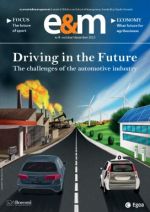
The Great Challenges for Italian Industry
The automotive industry represents one of the pillars of the Italian economy. However, starting from 2000, the crisis of the FIAT production model, culminating in the merger between FCA and PSA, has led to a significant contraction in production and, consequently, in turnover. Italy remains an important player but risks lagging behind, threatened by the competition from other European countries. There ...
Expected and Real Benefits of Industry 4.0
The automotive supply chain is a global industry historically characterized by a high degree of fragmentation of production due to numerous international and local connections, as well as substantial requirements for investment in digitalization approaches. In recent years, Industry 4.0 has grown in importance across many advanced manufacturing industries and represents an emerging industrial model ...
The Electric Revolution of the Italian Automotive
The automotive industry is a central sector for the European economy, both in terms of its contribution to the generation of economic value (estimated at around 4% of European GDP) and the direct or indirect employment of over 12 million people. The importance of the industry for European and national economies makes competitiveness and sustainability fundamental priorities for policymakers. In a ...
Transition to Electric: the Risks for Employment
The electric vehicle industry will have an impact on employment whose extent is debated by experts in the field. The Italian plants of Stellantis and companies related to the powertrain will likely face additional challenges beyond just electric vehicles themselves. What is apparent is the absence of an industrial policy and employment requalification initiatives, a situation that risks further compromising ...
Sustainable Mobility Between Obligation and Aspiration
Sustainable urban mobility has become a crucial objective in response to global climate change and the United Nations' 2030 Agenda. The 2015 Paris Accord drew attention to the need to reduce greenhouse gas emissions and limit global warming, with the European Union even aiming for climate neutrality by 2050. This necessity implies a fundamental reform of mobility in urban areas. Smart cities are adopting ...
A Great Future Behind Us?
The history of the Italian automotive industry, from the birth of FIAT to the formation of the Stellantis Group, represents a path that has not always been linear, marked by economic growth and contraction of productivity, labor disputes and more or less satisfactory agreements. The entry of Sergio Marchionne into the FIAT Group marked an international opening that, while avoiding the collapse of ...
Public Policies for Recovery
The crisis in the Italian automotive sector, which has been ongoing since the late 1990s, affects all sectors of the industry: from production to employment, from the lack of investments in R&D to the delay in the ecological transition. Labor unions play a crucial role in proposing agreements that can revive employment and stimulate the investments necessary for sustainable growth.
The Keyword is Transformation
We are living in a moment where the challenges are immense for all sectors, and perhaps more than ever before, these challenges are cutting across various industries. If we look at the automotive industry today, we see a transformation of unprecedented magnitude, never before seen in the 150 years of our industry's existence, nor in most other sectors even today. This transformation is a direct result ...
The Nature of Change
Facing change is a constant condition for businesses. Not only because the world around us is constantly changing, and businesses must decide how to respond to new external conditions. But also because we ourselves change, and the inevitable life cycle of individuals modifies businesses internally. New people join the company, others leave, and the people who remain, even simply due to aging, change ...