Search
Applied filters:
Refine search
- Keyword
- Finance (4)
- Business (2)
- Companies (2)
- Real estate (2)
- 2030 Agenda (1)
- Property (1)
- Property market (1)
- Ratings (1)
- Content type
- Journal article (5)
- Infographic (1)
- Language
- English (4)
ESG Ratings: Love Them or Hate Them?
In a context of growing investor interest for businesses attentive to the social and environmental risks of their activities, ESG ratings have emerged with the function of identifying and selecting companies in line with new market expectations. ESG controversies, the news disseminated by the media on the environmental, social, and governance aspects of companies, could represent a measure of real ...
The Centrality of Corporate Governance
To obtain the "sustainable success" that by now represents the principle of reference of the new corporate governance code for listed companies, large enterprises and SMEs must initiate a true process of change able to involve business, governance, and corporate strategy. The growing pressure from ESG investors, the size of companies, and the presence of independent board members are key elements ...
Sustainability at the Center of Business
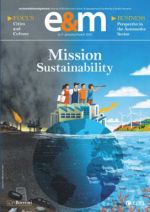
The goal of this Dossier is to assess the situation regarding sustainability, thus offering the contribution of the SDA Bocconi School of Management and its Sustainability Lab to the debate on the subject.

The Value of Sustainability in Real Estate
A survey conducted by SDA Bocconi highlights the great interest on the part of investors and policymakers for the new logics of sustainable real estate .

The Creation of Value through Sustainable Debt Instruments
Sustainable debt instruments, and in particular green bonds, sustainability-linked bonds, and green loans, represent an innovative, constantly-growing solution to finance business activities and projects. These instruments are characterized by the possible presence of the so-called greenium, the negative premium that debt subscribers are willing to pay the issues for those instruments. Although the ...
ESG Rating and Credit: How to Assess Integrated Risk
A sustainability rating, or ESG rating, represents an appropriate integration of the information on business risk deriving from the more consolidated credit rating. An integrated approach that involves a joint assessment of the financial solidity of a company (credit rating) and its sustainability (or solidity of the business model), allows for innovating risk management activity by making it more ...
Accelerating the Transition: Financial Services Must Also Do Their Part
In the last two years, the increase of social disturbances, the growing attention to climate change, and the need to act on environmental, social, and governance (ESG) issues, has attracted attention from companies in all sectors. Financial services companies are also called on to catalyze and accelerate the transition toward a new economy, based on ecosystems that satisfy the needs of all stakeholders. ...
The Impact of Sustainability on the Cost of Capital
The concept of creation of value has recently taken on a new feature, the sharing of value for all of the stakeholders involved. In order for this to occur, it is necessary for business strategies and models to be structured and managed in an amply sustainable vision in environmental, social, cultural, and ethical terms. Companies that are associated with high ESG performance have easier access to ...

The Virtuous Circle of Sustainability
The issue of sustainability in real estate is on everyone’s lips, but there is still much uncertainty about how ESG criteria can be applied and how their value can be measured. The only belief shared by all stakeholders is that sustainability should be a key element of any urban regeneration project; because it is only by respecting and integrating environmental and social dimensions into business ...