Search
Applied filters:
Refine search
- Keyword
- Sustainability (22)
- sustainability (19)
- innovation (17)
- Business (16)
- artificial intelligence (16)
- ESG (15)
- China (14)
- Healthcare (12)
- Subject
- Accounting & control (133)
- Economics (90)
- Financial system (18)
- Society & Culture (16)
- ICT (14)
- Arts, Architecture & Design (10)
- Sociology (9)
- Environment & Energy (4)
- Sector
- Services industry (10)
- Manufacturing (2)
- Media & communications (2)
- Non-profit sector (1)
- Primary industry (1)
- Education, training and research (1)
- Transport (1)
- Language
- English (181)
- Continent
- Europe (22)
- Asia (3)
- Africa (1)
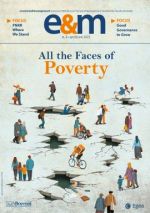
The Entirely Italian “Poverty Regime”
Premise: how do we measure poverty? What poverty is and how it can be measured is the subject of many theoretical and methodological debates that do not provide, nor could they provide, a single answer. It is not just a matter of choosing between a multidimensional or a unidimensional conception of poverty, and therefore which indicators to use (only economic or also human and social capital, ...
Educational Poverty Requires Strong Choices
Recent research by Save the Children, according to OECD analysis, reports two closely related and worrying facts: the first highlights that Italy's investment in education, instruction, and poverty protection for families is among the lowest in Europe; the second shows that in our country, absolute poverty, correlated with educational poverty, has increased by ten percentage points in ten years.[1] ...
Youth and Work: A Crucial Issue
Why talk about youth and poverty today? Because in our country, young people, even when employed, are increasingly exposed to this risk: according to the latest ISTAT data, referring to 2021, the incidence of absolute poverty is 14.2 percent for minors, 11.1 percent for young people between eighteen and thirty-four years old, 9.1 percent for adults between thirty-five and sixty-four years old, and ...
More Light in the World of the Homeless
Giorgio’s story Giorgio recently turned sixty. He is Italian and has had a precarious job for years. "I have always worked," he tells us when we meet him, "but you know how it is... sometimes as a freelancer, sometimes under the table, other times with a real contract... it depended on the circumstances and what I had to do." Time has passed quickly and now Giorgio finds himself in a ...

Discretion and Refinement at the Core of Quiet Luxury
Iconic brands such as Brunello Cucinelli and Loro Piana stand as champions of quiet luxury. While a “GG” Gucci belt buckle or a Christian Dior logo tote bag loudly assert their luxury status, the quiet luxury items, such as neutral-toned cashmere sweaters, silk button-down shirts, and wool overcoats, require discerning observers. The value of these pieces lies in expensive materials and expert ...
Excellence Becomes a Group: the Case of Florence
When we talk about the luxury market, we celebrate the brilliant sales results of the last two years and the amazing performance of some brands that are protagonists, using indicators ranging from turnover, to profitability, to the growth of direct stores, to brand equity, and the performance on the capital market. The latest report by Deloitte (Global Power of Luxury Goods 2022)[1] shows a varied ...
Luxury Hospitality: Challenges, Trends, and Good Practices
The luxury market is undergoing a significant shift, as the upcoming generations of consumers are expected to dominate the market in the future. Generations Y and Z, born between 1981 and 2012, are set to represent 80% of the global personal luxury goods market by 2030 (Bain & Company, 2023). These young consumers have a different approach to luxury than older generations. They value meaningful luxury ...
Authenticity Generates Uniqueness, Trust, and Loyalty
A brand is authentic when different stakeholders (employees, shareholders, customers, suppliers, etc.) feel that there is an alignment between declared values and objectives and concrete actions, inside the company and on the market. A strong, differentiated company culture contributes to a strong, differentiated brand, driven by the same purpose and values (Yohn, 2017). The brand is therefore ...
Personalizing the Product, but with Moderation
Traditionally, for the high-end consumer, the value of a product typically stems from its high price and limited accessibility, including in terms of distribution, generally accompanied by superior quality and a legitimacy often deeply rooted in the brand's heritage, that is, its history, that is extraordinarily important to confer desirability to the goods or services and boost the self-esteem of ...
NFTs for a New Customer Relationship
The first reported use case for NFTs in the luxury industry was announced in May 2019, when specialty watch brand Vacheron Constantin announced that it would enlist the skills of the French tech start-up Arianee to develop its digital certificate of authenticity using Blockchain technology (Arianee, 2019). Up until then, the luxury industry had relied on paper certificates and serial numbers etched ...