Search
Applied filters:
Refine search
- Keyword
- Sustainability (22)
- sustainability (19)
- innovation (17)
- Business (16)
- artificial intelligence (16)
- ESG (15)
- China (14)
- Healthcare (12)
- Subject
- Accounting & control (133)
- Economics (90)
- Financial system (18)
- Society & Culture (16)
- ICT (14)
- Arts, Architecture & Design (10)
- Sociology (9)
- Environment & Energy (4)
- Sector
- Services industry (10)
- Manufacturing (2)
- Media & communications (2)
- Non-profit sector (1)
- Primary industry (1)
- Education, training and research (1)
- Transport (1)
- Language
- English (181)
- Continent
- Europe (22)
- Asia (3)
- Africa (1)

The Protection of the Creativity of Chefs in the Haute Cuisine Sector
In most creative and cultural sectors, copyrights protect intellectual work, thus contributing to protecting competitive advantage. However, in the context of haute cuisine there is not yet a widespread practice regarding use of instruments that can legally protect the original creations of chefs. There are at least three reasons for the reticence of the haute cuisine sector to apply laws for protection ...

Make Way for Proptech as a Lever for Growth
The application of technological solutions and instruments for innovation of processes, products, and services is influencing the entire real estate sector. This affects not only sales, but many phases of the overall value chain. This is why proptech is exploding at the global level, driven by the United States and followed by China and Europe. The ubiquity of applications of technology to real estate ...
New Housing Needs and Market Responses
The platform economy is deeply modifying the entire real estate sector. Driven by demand whose protagonists have changed, the digitalization of the sector has imposed a new conception of the process of sale, in which online and offline experiences increasingly go together. Important evolutions have taken place during the phase of purchase and valuation of an apartment, with services increasingly attentive ...
New Social Needs at the Center of Living
The evolution of the living sector must start from an analysis of new social needs, due to four main trends: climate change, demographic changes, new forms of social interaction, and datification. From the exacerbation of environmental conditions to the new living needs for an aging population, from the need to design and create new spaces to deal with the increasingly inevitable waves of pandemics ...
The Virtuous Circle of Sustainability
The issue of sustainability in real estate is on everyone’s lips, but there is still much uncertainty about how ESG criteria can be applied and how their value can be measured. The only belief shared by all stakeholders is that sustainability should be a key element of any urban regeneration project; because it is only by respecting and integrating environmental and social dimensions into business ...

2008-2018: How to Interpret the Post-crisis Period
This third article in the mini-series dedicated to Economia & Management ’s thirty years, concentrates on the third decade of the magazine’s history, from 2008 to 2018, with the addition of a few digressions relating to 2019.
Looking Back over the Magazine’s First Thirty Years
Between 1988 and 2018 Economia & Management changed, reflecting the changing socio-economic context of Italy, its publishers, its directors. What changed was the subject matter covered, but not the importance placed on businesses and on the management of all institutions. As a “bridge journal” spanning academia and practice, connected with a business school, Economia & Management contributes to ...
Positive Effects on Performance, Both Direct and Indirect
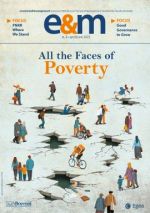
We decided to explore the role of governance for the sustainable growth of Italian businesses in various forms, thanks to the database of our Business Observatory, which encompasses the population of medium and large enterprises under family, state, coalition, and financial control (approximately 6,150) with a turnover exceeding 50 million euros (Figure 1). Figure 1 The ownership structure of the ...
The Territorial Allocation of Resources, between Good and Bad
The evidence presented suggests that PNRR allocations generally favor the most problematic areas of the country. However, depending on the specific area of intervention, this result is not always robust. For example, while funds for the environment appear to go to areas facing greater difficulties, those for education are not allocated according to the same logic. Next Generation EU and the ...
Investments Require New Leadership in the Public Sector
This is a critical and unresolved issue for our country's system, as despite efforts to strengthen administrative capacities and provide technical assistance, it continues to hinder the spending capacity of the European funds from which we benefit. The 2014-2020 programming period, which is coming to an end, shows, as of the time of writing, a spending rate of 63 percent of the resources allocated ...