Search
Applied filters:
Refine search
- Keyword
- AI (4)
- artificial intelligence (4)
- United States (3)
- China (2)
- Data-driven economy (2)
- Machine learning (2)
- digitalization (2)
- Arpanet (1)
- Subject
- Accounting & control (16)
- Financial system (5)
- Law (4)
- Economics (3)
- Management (2)
- Environment & Energy (1)
- Politics (1)
- Health & Safety (1)
- Knowledge area
- Data protection (10)
- Internet & networks (10)
- Cybersecurity (3)
- Software (3)
- Hardware (1)
- Business information systems (1)
- Content type
- Journal article (14)
- Language
- English (11)

Digital trade: who sets the rules in the absence of a global agreement?
The Ministerial Conference of the World Trade Organization is the summit that periodically brings together the trade ministers of member countries and represents the institution’s highest decision-making body. The latest took place at the end of March in Yaoundé, in Cameroon, and marked something more than a negotiating impasse. Among the central dossiers was the so-called moratorium on customs ...

Beyond the Festival: Sanremo as cultural infrastructure and brand platform
To observe the Sanremo Festival still means confronting a media object that is difficult to place within the traditional categories of television entertainment. For a few days each year, the Festival suspends the fragmentation of the contemporary media experience and recomposes a rare form of collective attention, one that cuts across age groups, cultural competencies, and consumption practices. Sanremo ...

The impact of non-financial risks: processes for strengthening organizational resilience
In recent years, corporate priorities have been homing in on non-financial risks as major sources of organizational vulnerability. This category includes geopolitical, cyber, business continuity, reputational, technological, and data management risks. Although they many manifest in various ways across sectors and geographical contexts, international risk rankings reveal a clear convergence: most of ...

AI, the market, and the value of possible worlds
The high valuations of AI stocks are fueling debate over a possible new technology bubble. A few figures explain why. In 2026, Nvidia surpassed a market capitalization of $5 trillion, while the U.S. semiconductor sector posted gains of more than 100% over the past year. The U.S. market is trading at multiples that are very high by historical standards: the S&P 500’s Shiller P/E has risen above 40, ...

The “nervous system” of cybersecurity: data, automation, and response to reduce risk
Today’s companies face a paradox: a greater number of security tools has led to greater complexity, data overload, and critical visibility gaps, effectively increasing the risk of breaches. The average Security Operations Center (SOC) is flooded with more than 10,000 alerts per day, with an estimated 30% not even reviewed due to volume and a high false-positive rate. This phenomenon, known as alert ...
Rethinking Risk Assessment: A Systemic Approach to Risk Measurement
Company management, understood as the balanced governance of the relationship between risk and return, is not a new topic, although it has evolved dramatically over time. While from a traditional perspective, this relationship was mainly interpreted in economic and financial terms, with the development of corporate governance models, the concept of return has gradually broadened to encompass a company’s ...
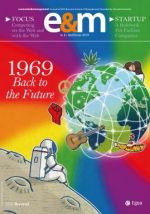
The Internet Needs Good Governance
Autumn 1969 in California saw the birth of the ARPANET, which enabled the transmission of data from one computer to another and laid the basis for the creation of a Network on a global scale in the following decades.#Today 4.39 billion people use the Network, 57 percent of the world’s population. One of the crucial questions is that of Internet Governance, which must be managed through a multi-stakeholder ...

Pressures and Tensions in Transatlantic Relations
Between 2004 and 2012, the United States and the European Union were each other's most important trading and investment partners; with annual trade of over 4 billion dollars, they generated 50% of the world's GDP and a third of global trade flows. Moreover, with the return to the White House of an Atlanticist president like Joe Biden, Washington has come back to the center of the climate agenda, re-entering ...
The Birth and Evolution of the Chinese Question
China is the player that has undermined US world hegemony the most, challenging not only the international system that came into being after 1945, but also its founding values and their universal character.#In recent years, technology supply chains, and primarily semiconductors, have been at the center of competition between the United States and China. The geopolitical nature of the technological ...
Digital platforms: an (almost) all-out battle
For several years now, Big Tech companies have been held responsible for almost every evil of modern society: the spread of fake news, hate speech and terrorist content; the publishing crisis and the threat to Western democracies; product counterfeiting and tax avoidance. Contrasting with the legislative hyperactivity of Australia, UK, and Europe with regard to Big-Tech companies is the relative inactivity ...