Search
Applied filters:
Refine search
- Keyword
- tipocontenuto_006 (10)
- Italy (8)
- State (8)
- Businesses (7)
- Capitalism (7)
- Economy (7)
- Sustainability (7)
- automotive (7)
- Subject
- Accounting & control (27)
- Financial system (20)
- Environment & Energy (11)
- Law (11)
- Management (11)
- Politics (9)
- ICT (3)
- Anthropology (2)
- Knowledge area
- Political economy (60)
- Microeconomics (34)
- Macroeconomics (28)
- International economics (20)
- Environmental economics (12)
- Labor economics (9)
- Public finance (8)
- Economic history (8)
- Content type
- Journal article (90)
- Editorial & column (12)
- Case history (1)
- Dossier and report (1)
- Interview (1)
- Language
- English (63)
- Continent
- Europe (13)
- Asia (1)

The Capitalism of the Future: State and Businesses in Search of an Author
In the last two years, the fragility of our businesses, due to their fragmentation, low capitalization, and the effects of the pandemic, has been supported by the public hand. But the prospects that emerged during 2022, first stagflation and then inflation, as well as a radical redesign of production and distribution chains at the international level, require a deep reflection that goes well beyond ...
The Platform Economy and the Paradoxes of Digital Work
Many of the virtues digital platforms boast of - such as the substitution of human work, the formalization of informal economies, the definition of flexible and autonomous forms of use, or the democratization of the market and business – are not confirmed by empirical evidence; rather, we can see trends in the opposite direction. As much as the platform economy appears as a “disruptive innovation,” ...
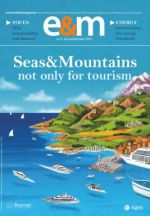
Mountain Tourism in Transition
Various studies conducted in 2020 and 2021 have shown an increase in the attention of travellers for sustainability, starting with environmental sustainability. A study conducted by Booking.com on its users, for example, indicated that 82 percent of travellers think that travelling sustainably is important. For this reason, mountain tourism is evolving towards zero-impact solutions able to integrate ...
Threats and Opportunities for the Fishing Industry
Commercial fishing represents a significant economic and social component at the national level, not only as a supplier of important food resources, but also as an expression of a deeply-rooted cultural heritage of the coastal areas. However, fishing opportunities are decreasing due to the need for preserving diversity in intact marine ecosystems, in line with the priorities of the European Green ...
The City Needs the Mountains
The idea of mountains seen as an impervious territory, far from services and economic-cultural flows, is by now obsolete. To the contrary, the forms of flexible, light, agile, alternative, and temporary organization developed in the mountains in terms of adaptability and habitability can represent answers for urban territories. The mountains are a source of resources, biodiversity, and energy, and ...
New Inhabitants in Mountain Territories
The question of the repopulation of mountain areas must be addressed in a broader view of local development. There are four priority axes with respect to the construction of policies of attraction and welcoming new inhabitants: the upgrading of territorial services; economic diversification; territorial marketing; and education and training. That approach allows for activating innovative systems for ...

Why and how to reduce the large amount of space debris
The increase of the number of space objects in low Earth orbit represents a threat for the long-term sustainability of the space environment, increasing the risk of collision between active satellites and space debris. The lack of a binding regulatory framework allows satellite operators not to take responsibility for maintaining the orbit, thus pursuing interests linked to their business. The model ...
To the Moon for Interplanetary Exploration?
The creation of a permanent outpost on the Moon will require the construction of infrastructure, both in orbit and on the surface, aimed at supporting the human presence on the Moon. The use of local resources will constitute the fundamental factor for the emergence of a commercial Moon market starting from the extraction and refinement of ice for the production of propellant. The activities of exploration ...
The importance of the public-private relationship
The concept of space economy indicates all of the activities that imply the commercial use of space technologies, whether they are inside or outside of Earth’s orbit. The space sector, which has long been dominated by the presence of public institutions, is now increasingly affected by private initiatives and has seen a doubling of turnover in the last fifteen years. The prospects for additional ...
The Second Life of the Metaverse
The metaverse represents the most advanced and sophisticated of current social media, a space of interaction and transaction populated by individuals and businesses/organizations. The fact that in the metaverse there are ample opportunities for business exploitation demonstrates that its realization could truly be “just around the corner.” Turning this corner, though, means facing scenarios that ...