Search
Applied filters:
Refine search
- Keyword
- Businesses (2)
- Work (2)
- Art (1)
- Business (1)
- Crisis (1)
- Cultural heritage (1)
- Culture (1)
- Digital (1)
- Thematic area
- Unemployment (1)
- Employment (1)
- Wages and salaries (1)
- Content type
- Editorial & column (5)
- Journal article (4)
- Language
- English (2)
Ten Years of Changes in the World of Work
In the last decade the Italian labor market has gone through substantial transformations, from the structure of employment, to the professional composition of the population, to the living conditions of workers, have been determined by the intersection of cyclical and structural factors: the great economic crisis, the gradual shift of production towards services, and long-term socio-demographic trends. In ...
The Good and the Bad of the Gig Economy
Technological innovation is producing epochal transformations in the economy, not only making heretofore unthinkable organizational scenarios possible, but increasingly affecting society, conditioning the way people work and consume. The evident aspect of these transformations is the rapid multiplication of commonly used terms – such as gig , sharing , or platform – that have enriched the vocabulary ...
The Second Life of the Metaverse
The metaverse represents the most advanced and sophisticated of current social media, a space of interaction and transaction populated by individuals and businesses/organizations. The fact that in the metaverse there are ample opportunities for business exploitation demonstrates that its realization could truly be “just around the corner.” Turning this corner, though, means facing scenarios that ...
Listening to the Silence: Reflections on the Great Resignation
What are the almost 4 million workers who have decided to leave their jobs in the United States since July 2021 fleeing from? From situations of unease, toxic work environments, absurd working hours, and conditions of burnout, i.e. emotional, physical, and mental exhaustion. It is as if the pandemic has shown that the jobs considered to be desirable were actually not as gratifying as they seemed or ...

Compare to Whom? A Reflection on Benchmarking
Benchmarking represents one of the most common management tools used by businesses. It is an extremely complex and detailed process that involves some important elements of decision-making: identifying the outside group for comparison; gathering information on that group’s practices; and choosing which among these practices are advisable/feasible to adopt internally, and how. A benchmarking analysis ...

Is Working Less and Earning More a Utopia?
The world of work, not only in Italy, is going through evident transformations and changes – the development of remote work, the wave of layoffs that has affected different professions, the lack of labor in some sectors – and some pressing demands, such as the introduction of a guaranteed minimum wage and a reduction of work hours with the same salary. Based on some experiments, that reduction ...
Transition to Electric: the Risks for Employment
The electric vehicle industry will have an impact on employment whose extent is debated by experts in the field. The Italian plants of Stellantis and companies related to the powertrain will likely face additional challenges beyond just electric vehicles themselves. What is apparent is the absence of an industrial policy and employment requalification initiatives, a situation that risks further compromising ...
Digital Nomadism as an Opportunity for Tourism
In the last decade, thanks to the intensification of technological infrastructure and the growth of professions linked to the knowledge economy, the phenomenon of digital nomadism has regarded a growing number of professionals and entrepreneurs who have chosen a flexible lifestyle, moving between destinations that have a combination of good social, cultural, and environmental characteristics. Many ...
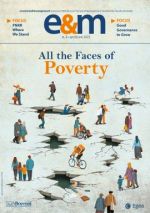
Poor But … Poor
The famous film by Dino Risi, Poveri ma belli, was made in 1956. Two more followed, composing a trilogy[1] in which poverty was explicitly mentioned in the titles but associated - unlike neorealist cinema - with the comedy genre. Italy in the 1950s was a poor country that had just emerged from the material devastation and destruction of World War II. The parliamentary inquiry of 1953 had indicated ...