Search
Applied filters:
Refine search
- Keyword
- Business (21)
- Italy (19)
- Sustainability (17)
- tipocontenuto_006 (17)
- AI (13)
- Africa (9)
- Businesses (8)
- Digital (8)
- Subject
- Accounting & control (96)
- Economics (63)
- ICT (11)
- Financial system (10)
- Sociology (7)
- Society & Culture (6)
- Environment & Energy (5)
- Management (5)
- Sector
- Services industry (10)
- Manufacturing (2)
- Media & communications (2)
- Non-profit sector (1)
- Primary industry (1)
- Education, training and research (1)
- Transport (1)
- Content type
- Journal article (181)
- Editorial & column (17)
- Infographic (8)
- Case history (4)
- Book (4)
- Dossier and report (3)
- News & intervention (3)
- Interview (2)
- Continent
- Europe (22)
- Asia (3)
- Africa (1)
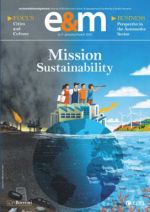
Sustainability Leaders for the Preservation of the Oceans
The growing interest among the international community for safeguarding the oceans can provide stimulus for a transition towards the adoption of more sustainable practices by businesses, including with reference to the safeguarding of marine ecosystems. The role of "sustainability leaders," those companies that combine the consciousness of the pressure they exercise on the oceans with practices aimed ...
All the Potential of the Blue Economy
The "blue economy" produces 3.3 percent of global GDP, representing a production system that generates annual sales estimated at 5.2 trillion dollars, gross value added of approximately 2.6 trillion dollars, and more than 168 million jobs. Despite still being a minority position, the interest for the preservation of marine ecosystems, corresponding to SDG 14 "Life Below Water," is growing more rapidly ...
Creative Cities Towards the Evolution of the Species
In recent years in Europe, at least 190 cities have focused on culture as an element of socio-economic development and territorial differentiation. The Covid-19 pandemic has shed light not only on the socio-economic value of culture, but also on those aspects that require new policies: from the precarious and fragile condition in which most workers find themselves, to the need to rethink urban tourism ...
The Social and Cultural Role of Libraries
Public libraries, at least on paper, represent perfect coworking spaces and fundamental locations to support female work. Given the recent extension of smartworking, even private companies should be interested in supporting them in order to offer their employees valid alternatives to working at home. Moreover, to limit the educational inequalities present in our country – currently accentuated by ...
The Value of Culture in the 15-Minute City
After the approval in 2015 of the United Nations Sustainable Development Goals, many cities drew up their "Local Agendas for Sustainable Development." Recently, these Agendas have incorporated the model of the "15-Minute City," a prototype of the polycentric city based on proximity. In the "15-minute city," culture becomes a factor to stimulate participation, feeding planning, a sense of belonging, ...
When Negative Emotions are Good for the Team
In work contexts, leaders are a source of emotional experience since they occupy a position that plays a leading role in the development of cognitive, emotional, and behavioral processes. For a team to develop a strong orientation towards learning, it is thus essential for there to be a leader able to effectively manage emotional strategies. While for some, negative emotions represent obstacles and ...
What Cities for Culture, What Culture for Cities of Tomorrow
The goal of this Focus is to reflect on the nature, quality, and value of the relationship between the world of cultural organizations and cities, but also on how these factors, in this strange present, can change to become a virtuous engine of economic-social rebirth.
The Corporate Debt Alarm. What’s Next
A few years ago, as part of an analysis of specific business challenges, I observed the detrimental impact of escalating corporate debt levels on companies' income statements, profits, and, consequently, their ability to self-finance. This surge in debt has exacerbated the complexity of accessing new financing and refinancing maturing debt, even when intended to support investment (Ruozi, 2021). Thus, ...
Hearing Aid Industry. The Hi-Tech Human Side
Hearing aids are vital medical devices that offer people with hearing loss the opportunity to regain their hearing function, whether it's congenital or due to a variety of factors that result in reduced hearing capacity. Typically dispensed through prescribed channels, their use requires the expertise of specialized professionals trained to regulatory standards established in almost every country. Over ...

A Strategic Imperative. The Role of HR Management in Italian PSOs
Nowadays, the role of human resource management in the public sector is widely acknowledged as critical for effectiveness and value generation in this context. In OECD countries, the share of GDP devoted to salaries of state employees ranges from 5.1% in Japan to 14.9% in Norway, while in Italy it is 9.7% (OECD, 2023). Public sector personnel accounted for as much as 29.2% of the workforce in Norway ...