Search
Applied filters:
Refine search
- Keyword
- Diversity & Inclusion (2)
- Art (1)
- Artistic heritage (1)
- Business (1)
- Disability (1)
- Diversity (1)
- Migrants (1)
- Organizations (1)
- Content type
- Journal article (4)
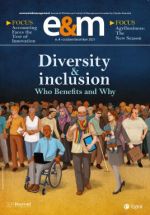
It’s Decision Time on Migrants
The increase of the migrant population in Italy directly affects businesses for three reasons: the demographic aging of our country demands a generational change in many key occupations in our economy; participation in the labor market represents the most efficient vehicle for social integration; and making the most of the value of migrant human resources guarantees advantages for competitiveness ...
Managing Disability Beyond the Stigma
In Italy, the degree of adoption of policies and practices on the subject of disability is still low. The few cases of success are determined more by personal factors (individual motivations) and contingent factors (a good boss, sensitive colleagues), than by the systematic efforts of HR and organizations. This shows that businesses are neither equipped in terms of knowledge and skills to manage the ...
Where Resistance Lurks
Some investigations show that only 20.7 percent of Italian businesses have adopted at least one non-legally mandatory measure with the aim of managing and promoting diversity among workers. This is a sign that the issue of "diversity and inclusion" still has difficulty entering the agendas of personnel directors and managing directors.#Faced with the possibility that a stigmatized group can threaten ...
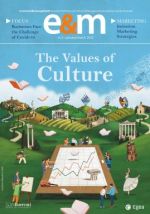
Multiculturalism, Diversity, and Inclusion Strategies
Contemporary society forces artistic and cultural institutions to consider the multiplicity of the cultural groups that characterize it. The need for policies to support inclusion, in order to guarantee the right to free participation in a community's cultural life, is a commitment which every organization must face, defining the management and organizational aspects to hybridize that are indispensable ...